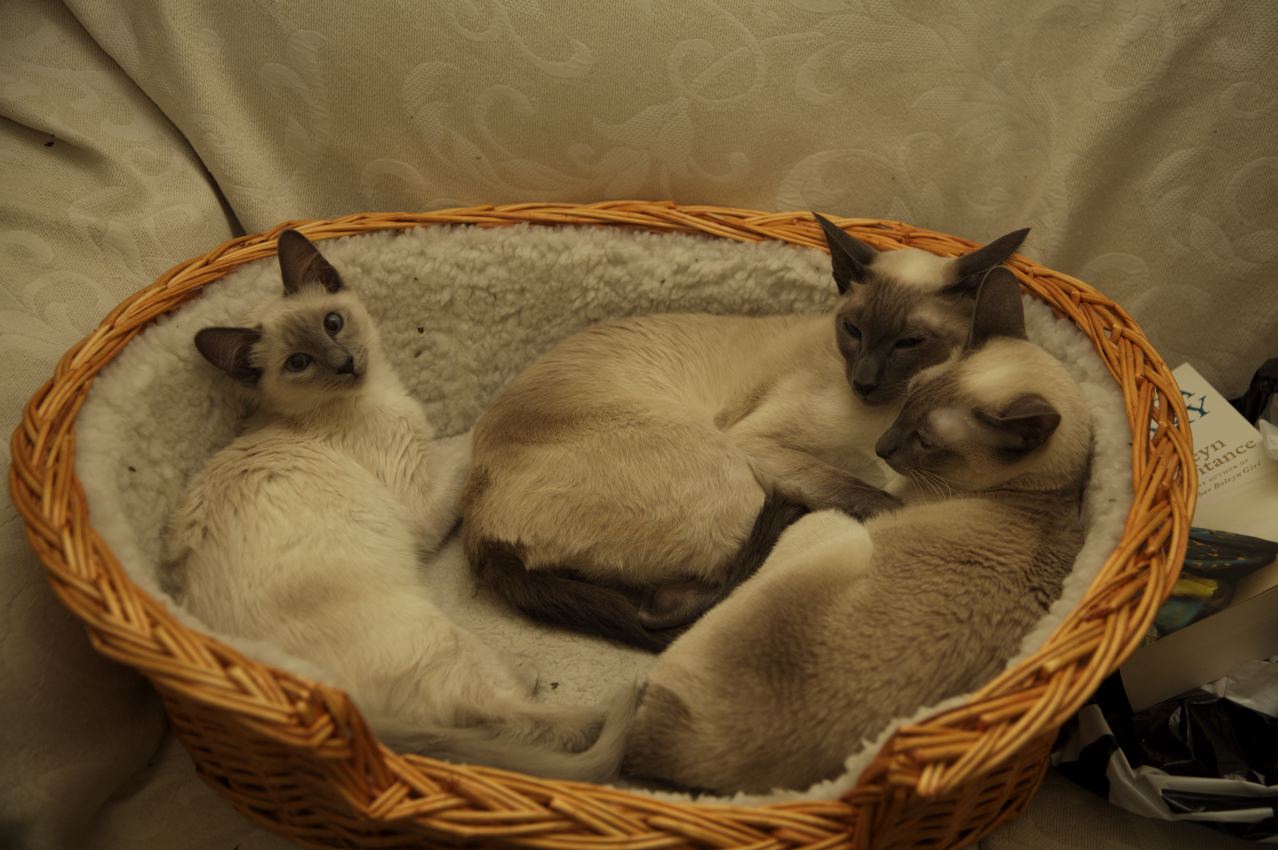
In very basic terms, a breed is a group of related felines that share
unique conformation, pattern, coat length, coat type, colour
parameters, temperament and which sometimes come from a particular
geographic region. However, some registries may have different
standards for the same breed. To be considered a breed by a cat
association, the breed must be different from existing breeds in a
distinct way.
The major factor in determining whether a cat is a separate breed is
whether cats with the specified characteristics breed true or, in other
words, produce offspring that are uniform and meet the breed standards
that have been established for that breed. The members of a purebred
generally produce uniform offspring. However, there are some
exceptions, eg, the Manx.
New breeds can develop in a number of ways: by spontaneous mutation; by
combining established breeds; and by the deliberate modifying and
shaping of polygenes that control particular characteristics to create
new characteristics. Many new breeds, especially those created by cross
breeding and in particular short-haired breeds which have long-haired
counterparts or long-haired breeds that have short-haired counterparts,
can be regarded as merely being variants of existing breeds. Whether
these variants in fact come to be considered to be their own breed
depends on the enthusiasm of the proponents of the breed and the
methods used to develop the breed. Examples of short-haired breeds
which have long-haired counterparts that developed as a result of the
selective breeding of long-haired kittens that sometimes appeared in litters of short-haired cats or short-haired kittens that sometimes appeared in litters of long-haired cats include:
* the Abyssinian (short-haired) and the Somali (long-haired);
* the Oriental Shorthair (short-haired) and the oriental Longhair (long-haired);
* the Siamese (short-haired) and the Balinese (long-haired); and
* the Persian (long-haired) and the Exotic Shorthair (short-haired).
Breeds are not always sorted by hair length. The Japanese Bobtail,
American Curl, Scottish Fold and Manx have both short-haired and
long-haired varieties.
The most common way in which a new breed develops is through mutation
which can be spontaneous. Sometimes the mutation is not obvious and
sometimes the mutation is obvious. In the wild, if the mutation does
not have a positive impact on the cat's ability to survive, it will die
out. However, sometimes because of geographic conditions or human
intervention, a mutation that would not be beneficial in the wild
generally can survive. One of the more common examples of this is the
Manx which does not have a tail - the lack of a tail is potentially
damaging because it shortens the spine but because of the specific
geographic conditions in the Isle of Man, the cat developed and
flourished.
The second way in which new breeds develop is through combining or
cross-breeding established breeds. Sometimes the crosses happen
accidentally but the more common situation is that breeds a combined
intentionally to achieve a particular purpose. While, deliberate
combining of breeds is often used by breeders to develop new colour
variations or intensify colour, it can also be used to develop new
breeds. Examples of combining breeds to produce a new breed are:
* the Himalayan (which was developed by combining the Persian and the
Siamese but which some cat associations consider to be a variant of the
Persian);
* the Tonkinese;
* the Exotic Shorthair; and
* the Javanese.
The third way in which a new breed is developed is deliberate modifying
and shaping of polygenes that control particular characteristics to
create new characteristics. This is achieved via selective breeding.
This method is often used to refine colour or a particular feature.
However, in some instances, the refining of features has caused
problems in the breed, eg, selective breeding of a Persian's facial
features have created breathing problems and a runny nose in some cats.